


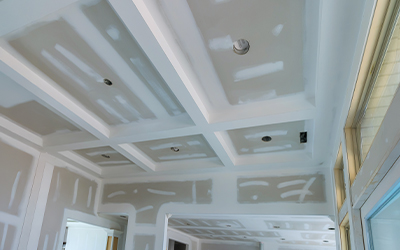
Spring cleaning isn’t the only home maintenance task to tackle when winter ends. This is the time of year to spot signs of winter wear on your walls that make your home look tired and neglected. Here are some drywall repair tips for a spring drywall refresh.
What causes winter drywall damage?
Winter exposes your home to extreme temperatures and weather fluctuations that can wreak havoc both inside and out. Turning up the heat inside when temperatures drop outside causes your home’s wood framing to shrink and expand. All that hot, dry air can make drywall brittle, increasing the risk of cracks as the house expands and contracts.
Drywall is also vulnerable to water damage when snow and ice melt, leading to leaks. Additionally, day-to-day wear through the winter months can cause minor damage, such as discolouration or a bubbling effect on walls from constant exposure to salt and moisture on wet boots and outerwear.
What are the signs of winter drywall damage?
Include the following telltale signs of winter drywall damage on your spring home maintenance to-do list:
- Cracks (especially around your doors, windows, or along the ceiling)
- Bubbling or peeling paint
- Raised nails/screws
- Discolouration
- Warped baseboards
What materials are required for drywall repair?
You can find drywall materials and tools at your local home improvement centre, including:
- Filler or spackle (Bonus tip: Coloured products that dry white make it easier to confirm the filler is dry, and also don’t require primer before painting.)
- Fibreglass self-adhesive drywall tape or drywall patches
- Drywall screws
- Sandpaper
- Primer
- Paint
- Dust mask
- Utility knife
- Putty knife
- Drywall saw
- 3” scrap wood
- Drywall
Use Spackle for Minor Damage
You can repair minor issues like dents, holes, and small cracks using “spackle” products to smooth out the imperfections. Although you can use your finger to fill in the holes and small cracks, a putty knife provides a more professional finish. The thicker and more imperfect the application, the more difficult it becomes to achieve a smooth finish with sanding. A fine-grit sandpaper will smooth imperfections, allowing you to touch up or repaint the area.
Drywall Repairs for Cracks
If the crack is longer, wider, or deeper, you will need to add a few more steps to fill the gap:
- Use your utility knife to chip off loose paint and cut away rough edges.
- Remove debris and fill the crack with spackle with a putty knife.
- For cracks wider than half an inch, use fibreglass self-adhesive drywall tape to cover the crack before applying spackle.
- Before sanding, allow the filler to dry completely based on the manufacturer’s directions.
- If you find the crack is still visible, apply another thin layer of spackle and repeat the process.
- Remove any dust or debris before finishing up with paint.
Tackling Popped Drywall Nails
Popped nails create a raised circle in walls, often surrounded by cracked paint. To cover up nail damage, follow these steps:
- Use a drill to secure a drywall screw about an inch or two above the nail.
- You want to “sink” the screw below the drywall surface so you can cover it with spackle.
- Tap the nail back into place with a rubber mallet; a hammer will damage the surrounding drywall.
- Spackle the screw and allow it to dry before sanding away imperfections to prepare the repair for touch-ups.
Patching Medium Drywall Holes
Winter is less likely to cause actual holes, but since you’re already in maintenance mode, you might as well add them to your list! This is an easy process thanks to adhesive drywall patches that will quickly cover the damage. Follow the same steps as you would when using fibreglass tape.
Dealing With Water Damage During Drywall Repair
If the drywall has water damage, you will need to remove any sections that are still wet or that are discoloured by mould or mildew. Be sure to cut away an additional inch or two to ensure you remove any outlying damp areas. Follow these wall repair steps:
- Use a carpenter’s square to draw a guideline as straight as possible for the area you plan to remove.
- Find the studs in the area where you are replacing the drywall, and mark them so you know where to start cutting.
- Use a drywall saw to cut horizontally along your lines just past the first stud until you hit the next stud. Then, cut down to the lower line and back across to remove the drywall.
- Set the piece aside to use as a template for the replacement drywall.
- For the drywall over the studs, score the surface several times with a utility knife until you can see any screws that need to be removed.
- Create wood drywall supports—using 3” scrap wood—by first measuring the hole and adding four inches to your measurement.
- Cut your supports and allow for a space of about 4” between supports, using at least two supports to secure the drywall.
- Affix the supports using drywall screws by positioning them vertically behind the drywall in the center of the hole so they sit about 2” at the top and bottom. Be sure to sink the screws.
- Cut your drywall to size, tracing the piece you removed. If the piece was removed in pieces, you will have to measure the hole and get it as close to the size as possible.
- Try the drywall section on for size to make sure it is snug but not tight, and make adjustments if necessary.
- Secure the drywall using drywall screws, ensuring they are slightly sunken.
- Apply drywall tape to the cracks with joint compound, smoothing the compound with a putty knife.
- Allow your patchwork to dry overnight, then apply a second coat before sanding, priming, and painting.
Reach Out to the Professionals at Ontario Drywall And Taping
Although basic repairs are an easy DIY project for most homeowners, you should call in the professionals for more complicated jobs to maintain the wall’s structural integrity. This is also the perfect excuse for an instant spring makeover with a coat of an exciting new paint colour.
At Ontario Drywall And Taping, we specialize in high-quality drywall installation services ideal for your spring renovation, drywall repair, and home maintenance projects. Contact us today to schedule a consultation or site visit. Call us at (647) 878-4466 or email us at info@ontariodrywallandtaping.ca.

